Potential DNA Twist Could Reveal Nick Is Not Summer’s Biological Father on Y&R
For decades, Summer Newman has been positioned as Nick Newman’s beloved daughter and one of the emotional anchors of the Newman family. Her identity as a Newman has shaped her relationships, her power struggles, and her sense of self. But in the world of The Young and the Restless, no lineage is ever truly safe. A potential DNA retcon revealing that Nick is not Summer’s biological father would be one of the most explosive twists the show could deliver in 2026, and it would fundamentally reshape multiple legacy families at once.

A revelation like this would fit perfectly within Y&R’s long-standing storytelling pattern. The show has repeatedly used paternity and maternity twists to refresh its core families, most famously when Jack Abbott learned he was not John Abbott’s biological son. That twist redefined Jack’s identity and rewrote decades of Abbott history. Applying a similar retcon to Summer would be a legacy-level bombshell that writers often reserve for major turning points or generational resets. It would instantly create new story fuel while honoring the soap tradition of shocking family revelations.
The groundwork for such a twist already exists in the show’s history. Phyllis Summers has always been a character who operates in morally gray territory, and her early relationship timeline with Nick has never been perfectly airtight. In classic soap fashion, writers could easily reveal that Phyllis was involved with another man around the time Summer was conceived, and that she chose to keep the truth hidden. A decades-old lie finally coming to light would be consistent with Phyllis’s character and would give her one of the most devastating secrets of her life.
Another plausible narrative route would involve corrupted or manipulated DNA results. Genoa City’s medical labs have a notoriously unreliable track record, and soap fans have long joked that no test result is ever permanent. Writers could reveal that a previous paternity test was tampered with, swapped, or misread, either by a villain seeking leverage or by Phyllis herself in a desperate attempt to secure Summer’s place in the Newman dynasty. This approach would allow the show to retcon the past without contradicting existing scenes, since the characters would have been operating on false information all along.
The emotional fallout from such a revelation would be enormous, especially for Nick. His identity as a father has been central to his character arc, and learning that Summer is not his biological child would force him to confront questions about what fatherhood truly means. The storyline could explore whether love and upbringing outweigh DNA, while also showing Nick’s internal struggle with betrayal and loss. This would be a deeply human arc, giving Joshua Morrow rich material and giving viewers a classic soap emotional rollercoaster.




For Summer herself, the twist would trigger a massive identity crisis. She has always leaned heavily into her Newman identity, using her lineage as both armor and weapon in her personal and professional battles. Discovering that she is not biologically a Newman would destabilize her sense of belonging and could push her toward darker, more ruthless behavior. Alternatively, it could force her to reevaluate her values and relationships, especially her bond with Victor, Nick, and the rest of the Newman clan.
Phyllis would arguably be the character most affected by this bombshell. If she knowingly hid the truth, she would face the full fury of both Nick and Summer, not to mention the broader Genoa City community. This storyline could position Phyllis as both villain and tragic figure, a mother who lied out of fear, ambition, or love, and who now must live with the consequences. It would also reignite her long-standing conflicts with the Newmans and potentially with the man revealed to be Summer’s biological father.
The identity of Summer’s real father would be the ultimate wildcard and the key to expanding this twist into a multi-family saga. If the writers chose Jack Abbott, it would blur the lines between the Abbott and Newman dynasties in a deeply uncomfortable way, especially given Summer’s romantic history with Kyle. If the father were a completely new or returning legacy character, it could introduce fresh bloodlines and rivalries. Either choice would give the show months, if not years, of story potential.
From a storytelling perspective, this twist would serve as a perfect generational reset. Soaps thrive on reconfiguring family trees to keep relationships dynamic, and altering Summer’s lineage would ripple through business alliances, romantic entanglements, and power struggles. It would also create opportunities for new characters tied to her biological lineage, expanding the canvas of Genoa City and keeping the narrative ecosystem alive.
Ultimately, revealing that Nick is not Summer’s biological father would be one of the boldest moves Y&R could make in 2026. It would honor classic soap traditions while delivering modern, character-driven drama. More importantly, it would remind viewers that in Genoa City, bloodlines are never as secure as they seem, and every family secret is just waiting for the right moment to explode.Move upMove downToggle panel: WPCode Page ScriptsOpen save panel.
Cane’s Collapse Marks Shift from Businessman to Unpredictable Predator
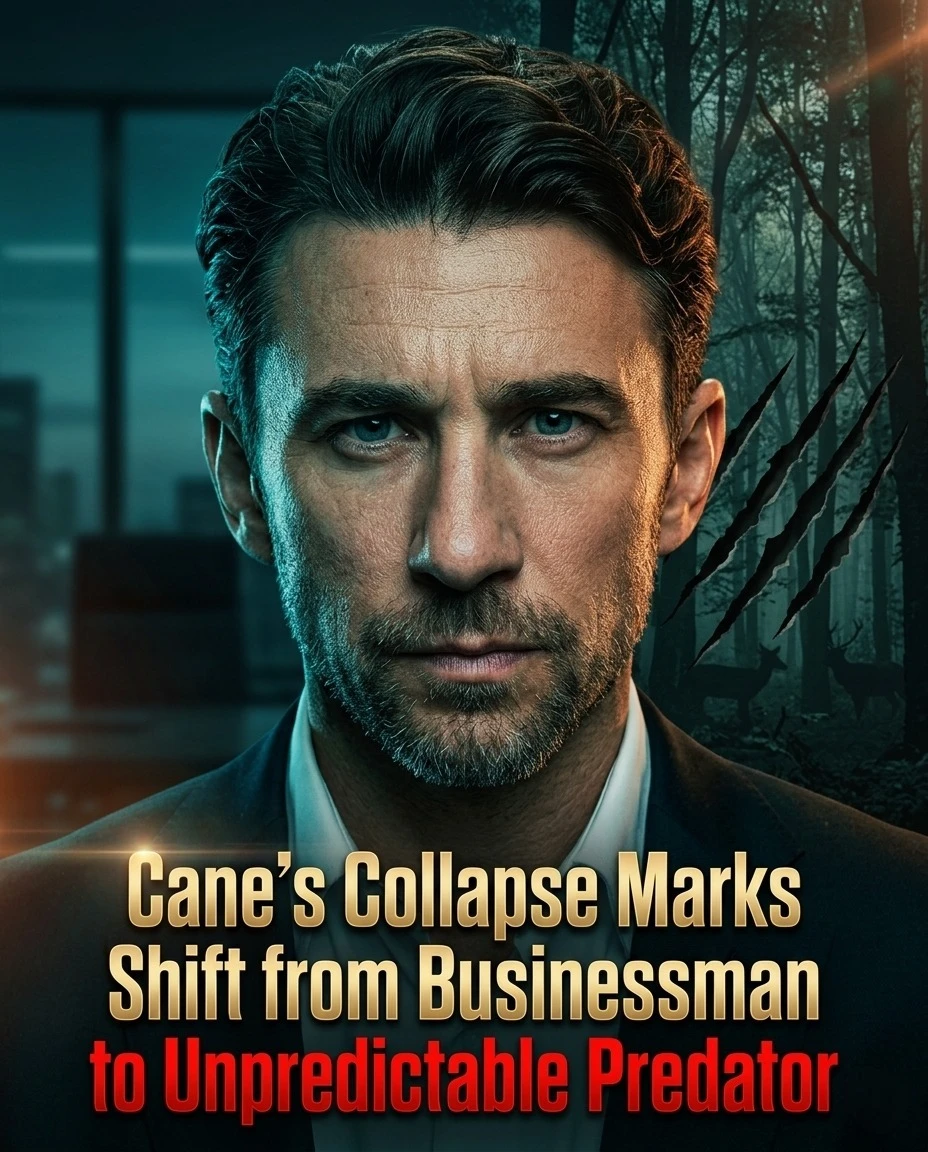
Cane’s sudden collapse wasn’t just a business failure—it felt like a complete erasure of everything he once controlled. In a single moment, Arabesque was gone, his money vanished, and every safety net he relied on disappeared. But what made this moment so compelling wasn’t the loss itself. It was the silence that followed. No panic, no desperation—just a shift. And that shift is what makes this storyline so explosive, because it doesn’t read like a downfall. It reads like the beginning of something far more dangerous.

What Cane lost wasn’t limited to his company. His personal world had already been unraveling long before the financial blow. Lily had walked away, his connection to his family was strained, and his reputation had taken hit after hit. By the time Arabesque collapsed, Cane wasn’t just financially ruined—he was emotionally isolated. And that kind of isolation matters, because it creates a version of a man who no longer has anything to protect. When there’s nothing left to lose, the rules stop mattering.
The most important turning point wasn’t the bankruptcy itself—it was Cane’s reaction to it. When he fired his accountant without hesitation, it wasn’t just anger. It was clarity. That moment signaled that Cane was no longer interested in playing by the same system that had just failed him. He didn’t argue, he didn’t negotiate, and he didn’t try to fix what was broken. Instead, he made a choice to abandon the structure entirely. That’s what transforms this from a business story into a power story.
Cane’s declaration that he would “take what others have” is where everything changes. On the surface, it sounds reckless, even illegal. But through a different lens, it reads as something else entirely—a man refusing to ask for permission anymore. Cane isn’t trying to rebuild what he lost. He’s trying to replace it on his own terms. And that distinction is critical, because it reframes him from a failed businessman into a calculated predator who is ready to operate outside the boundaries that once contained him.
Fans are already picking up on this shift, and that’s why the reaction has been so strong. This doesn’t feel like a character being destroyed—it feels like a character being redefined. Cane has often existed in a gray space, but now that gray is deepening into something sharper, more compelling. Viewers aren’t just watching him fall. They’re watching him evolve into a version of himself that is harder, colder, and far more unpredictable.
There’s also a powerful emotional undercurrent driving this transformation. Cane didn’t arrive at this moment in a vacuum. He was pushed. Rejected by Lily, challenged by Devon, dismissed by those who once stood beside him—every fracture contributed to this outcome. That’s why it’s so easy to frame this not as a descent into villainy, but as a response to betrayal. Cane didn’t wake up and decide to become dangerous. The world around him stripped away every reason not to be.
What makes this new version of Cane especially threatening is the shift in power dynamics. Before, he still had something to lose—relationships, reputation, a sense of identity. Now, those anchors are gone. Without them, he becomes far less predictable and far more willing to take risks others wouldn’t dare. That unpredictability is what turns him into a genuine threat, not just to his enemies, but to the entire balance of power in Genoa City.
And that leads to the most unsettling truth of all: Cane may now be at his strongest precisely because he has nothing left. A man who is no longer afraid of losing is a man who can’t be controlled. He doesn’t need approval, he doesn’t fear consequences, and he doesn’t hesitate. That combination is what transforms him from a fallen businessman into a force that could reshape everything around him.
Looking ahead, this storyline feels like the setup for something much bigger. Cane’s new mindset opens the door to corporate takeovers, strategic revenge, and possibly even direct conflict with figures like Victor. But the real tension lies in how far he’s willing to go—and who will get caught in the crossfire. Because if Cane truly believes the world owes him something, then he’s not just rebuilding. He’s coming to take it.
In the end, this isn’t a story about loss. It’s a story about what happens after the loss, when fear disappears and restraint goes with it. Cane didn’t lose everything. He lost the part of himself that was willing to hold back. And that might be the most dangerous transformation of all.