Cane Ashby’s Return to Y&R Signals Strategic Power Shift in Genoa City
Cane Ashby’s return to The Young and the Restless was never about reclaiming what he lost—it was about redefining how power works in Genoa City. While Victor Newman celebrated his victory, believing he had crushed Cane’s empire and broken his spirit, the truth may be far more dangerous. Cane didn’t come back for revenge alone. He came back with a system. And that system is already in motion.

The biggest mistake Victor may have made is assuming Cane would react emotionally. That he would lash out, beg for redemption, or spiral after losing Arabesque and Lily. But Cane did the opposite. He went silent. He stepped back. And in that silence, he started building something far more calculated. As many fans have pointed out, “Cane is no dummy—he’s up to something” . That “something” doesn’t look like chaos. It looks like structure.
At the center of that structure is Amanda. She isn’t loud, she isn’t flashy, and that’s exactly what makes her dangerous. Amanda represents the legal brain behind Cane’s operation—the one ensuring every move is airtight. This isn’t Victor’s style of brute-force manipulation. This is something cleaner, colder. Every contract, every acquisition, every move Cane makes can be protected, justified, and weaponized if needed. Fans are already picking up on this, noting that Amanda is “doing the legal aspects and gonna do it right” . That means when Victor finally strikes back, he may find himself trapped—not by force, but by his own inability to counter a flawless legal game.
Then there’s Holden Novak, the quiet executor of Cane’s plan. While the spotlight stayed on Victor’s takedown of Arabesque, Holden was moving in the shadows—buying up key properties across Genoa City. Not randomly, but strategically. This is where the story shifts from revenge to territory control. Because when you own the spaces where power players gather, you don’t just participate in the game—you reshape it. And fans have been watching closely, pointing out that Holden has been “buying up properties all over GC” as part of a much bigger plan .
But what truly elevates this theory is the possibility that Cane’s network doesn’t stop there. Speculation is growing around figures like Matt Clark and a potential Vegas connection—suggesting Cane may be tapping into off-the-grid financial systems and hidden alliances. If that’s true, then this isn’t just a corporate comeback. It’s a multi-layered operation combining legal precision, real estate control, and shadow funding. A structure designed not just to fight Victor—but to outlast him.




This is where Cane becomes something Victor has never truly faced before. Not a rival with one weakness. Not an enemy who can be isolated and crushed. But a decentralized force. Victor’s power has always come from control—knowing where to strike, who to manipulate, and how to dominate a single battlefield. But Cane isn’t offering a single battlefield. He’s creating multiple fronts, all connected, all moving at once. And that makes him unpredictable.
What makes this even more dangerous is that Victor may already know pieces of the truth—and still be underestimating it. Some fans believe Victor has been tipped off about Cane’s moves through Adam, yet has chosen not to act immediately . That opens the door to two possibilities: either Victor is planning a counterstrike of his own, or he believes Cane’s moves aren’t significant enough to matter. If it’s the second, that may be his biggest mistake yet.
Because when you look at the full picture, this isn’t a man trying to get revenge. This is a man building a new power structure from the ground up. Cane has lost everything—his company, his relationship, his position. And that makes him far more dangerous than before. He has nothing left tying him to the old rules. Nothing forcing him to play fair in the emotional sense. Only strategy remains.
That’s why the real twist here isn’t that Cane wants to take Victor down. It’s that he may already be doing it—quietly, piece by piece, without triggering alarm. Fans are already sensing it, insisting Cane is “nowhere near done” and that everything unfolding is part of a “bigger plan” . And if they’re right, then Victor didn’t just defeat Cane.
He created the one opponent who learned from him… and then evolved past him.
The Newman Empire under threat
Image created
Cane’s Collapse Marks Shift from Businessman to Unpredictable Predator
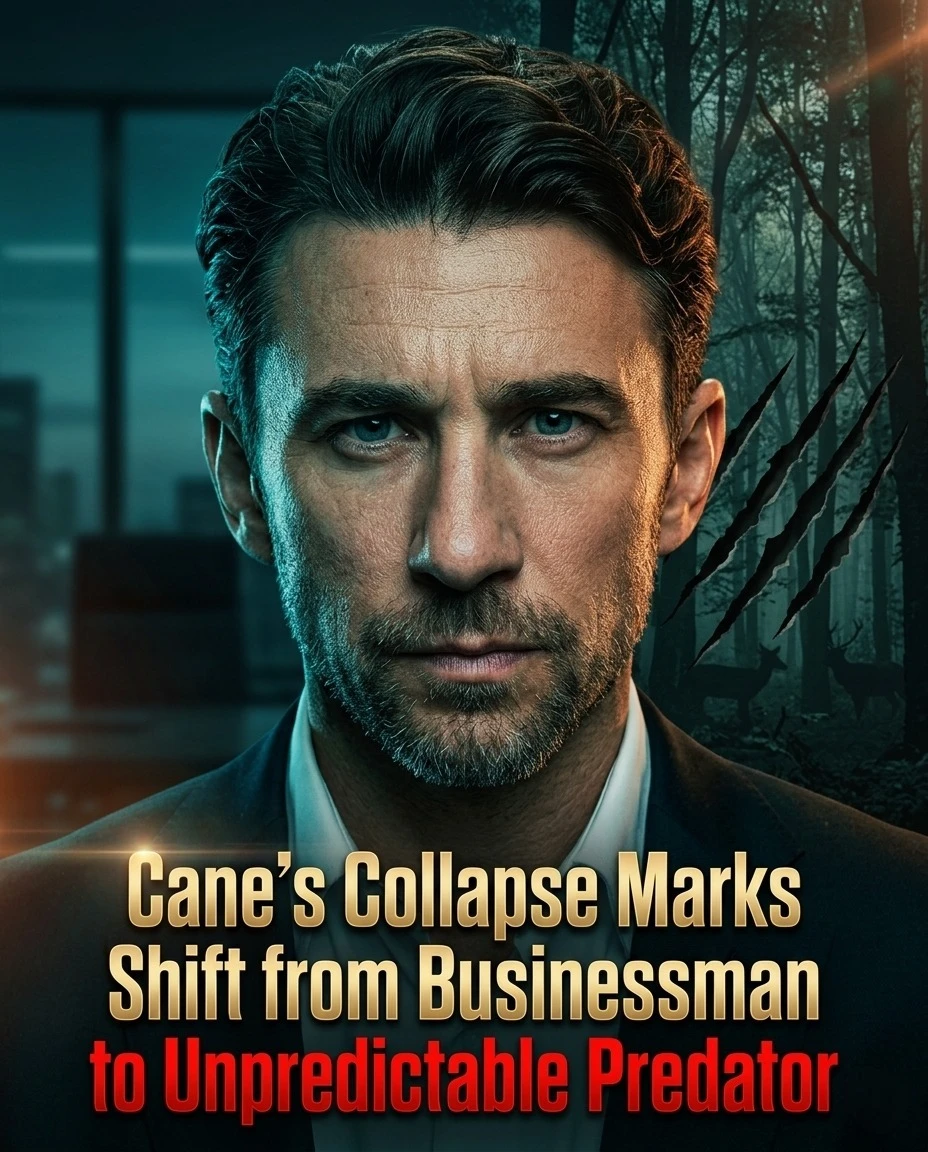
Cane’s sudden collapse wasn’t just a business failure—it felt like a complete erasure of everything he once controlled. In a single moment, Arabesque was gone, his money vanished, and every safety net he relied on disappeared. But what made this moment so compelling wasn’t the loss itself. It was the silence that followed. No panic, no desperation—just a shift. And that shift is what makes this storyline so explosive, because it doesn’t read like a downfall. It reads like the beginning of something far more dangerous.

What Cane lost wasn’t limited to his company. His personal world had already been unraveling long before the financial blow. Lily had walked away, his connection to his family was strained, and his reputation had taken hit after hit. By the time Arabesque collapsed, Cane wasn’t just financially ruined—he was emotionally isolated. And that kind of isolation matters, because it creates a version of a man who no longer has anything to protect. When there’s nothing left to lose, the rules stop mattering.
The most important turning point wasn’t the bankruptcy itself—it was Cane’s reaction to it. When he fired his accountant without hesitation, it wasn’t just anger. It was clarity. That moment signaled that Cane was no longer interested in playing by the same system that had just failed him. He didn’t argue, he didn’t negotiate, and he didn’t try to fix what was broken. Instead, he made a choice to abandon the structure entirely. That’s what transforms this from a business story into a power story.
Cane’s declaration that he would “take what others have” is where everything changes. On the surface, it sounds reckless, even illegal. But through a different lens, it reads as something else entirely—a man refusing to ask for permission anymore. Cane isn’t trying to rebuild what he lost. He’s trying to replace it on his own terms. And that distinction is critical, because it reframes him from a failed businessman into a calculated predator who is ready to operate outside the boundaries that once contained him.
Fans are already picking up on this shift, and that’s why the reaction has been so strong. This doesn’t feel like a character being destroyed—it feels like a character being redefined. Cane has often existed in a gray space, but now that gray is deepening into something sharper, more compelling. Viewers aren’t just watching him fall. They’re watching him evolve into a version of himself that is harder, colder, and far more unpredictable.
There’s also a powerful emotional undercurrent driving this transformation. Cane didn’t arrive at this moment in a vacuum. He was pushed. Rejected by Lily, challenged by Devon, dismissed by those who once stood beside him—every fracture contributed to this outcome. That’s why it’s so easy to frame this not as a descent into villainy, but as a response to betrayal. Cane didn’t wake up and decide to become dangerous. The world around him stripped away every reason not to be.
What makes this new version of Cane especially threatening is the shift in power dynamics. Before, he still had something to lose—relationships, reputation, a sense of identity. Now, those anchors are gone. Without them, he becomes far less predictable and far more willing to take risks others wouldn’t dare. That unpredictability is what turns him into a genuine threat, not just to his enemies, but to the entire balance of power in Genoa City.
And that leads to the most unsettling truth of all: Cane may now be at his strongest precisely because he has nothing left. A man who is no longer afraid of losing is a man who can’t be controlled. He doesn’t need approval, he doesn’t fear consequences, and he doesn’t hesitate. That combination is what transforms him from a fallen businessman into a force that could reshape everything around him.
Looking ahead, this storyline feels like the setup for something much bigger. Cane’s new mindset opens the door to corporate takeovers, strategic revenge, and possibly even direct conflict with figures like Victor. But the real tension lies in how far he’s willing to go—and who will get caught in the crossfire. Because if Cane truly believes the world owes him something, then he’s not just rebuilding. He’s coming to take it.
In the end, this isn’t a story about loss. It’s a story about what happens after the loss, when fear disappears and restraint goes with it. Cane didn’t lose everything. He lost the part of himself that was willing to hold back. And that might be the most dangerous transformation of all.