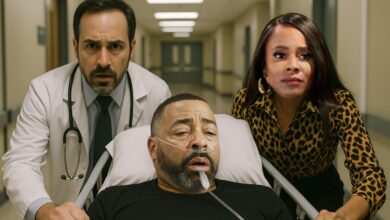
Anita Was Angry When Venon Prevented Her From Having The Tumor Removed. Beyond The Gates Spoilers
Anita’s Cancer Battle Takes a Devastating Turn as Vernon Fears the Surgery Could Change Everything
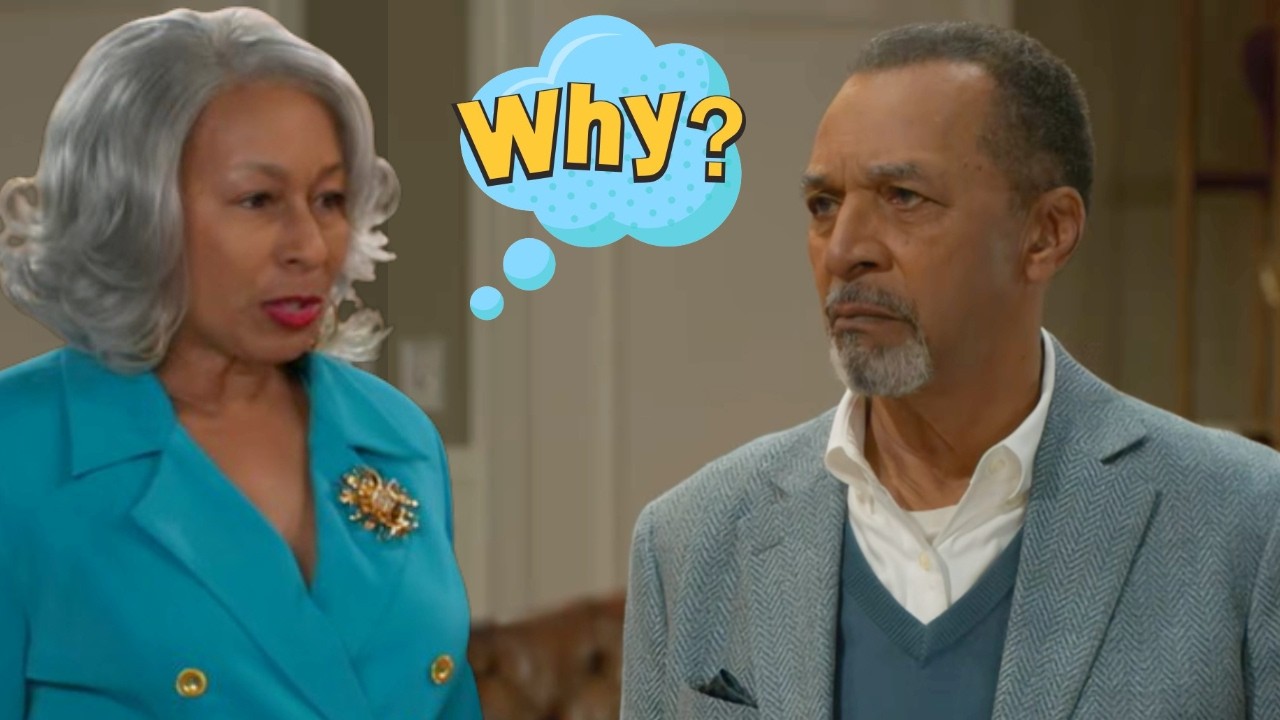
💔 ANITA’S VICTORY MOMENT TURNS INTO A HEARTBREAKING NEW FEAR! 😢 After surviving her final chemotherapy treatment, Anita is ready to reclaim her life, her body, and her freedom — but Vernon’s hesitation sparks an emotional clash that cuts deeper than anyone expected. What begins as a fight over surgery quickly becomes something far more painful: a battle over control, fear, identity, and the terrifying question of what survival may cost her next. As Doctor Bower prepares Anita for more tests and possible life-altering decisions, Vernon realizes the woman he loves may be standing at the edge of a future neither of them is truly ready to face.
Key Takeaways
- Anita finishes her final round of chemotherapy and desperately wants to move forward.
- Vernon worries she is rushing into surgery before her body is ready.
- Their argument is not really about surgery, but about fear, control, and independence.
- Anita wants to drive again and reclaim the freedom cancer took from her.
- Doctor Bower explains that more tests are needed before surgery can happen.
- Anita may face devastating medical choices involving her ovaries, fallopian tubes, or even both breasts.
- Vernon’s hesitation comes from fear of losing Anita, not from wanting to control her.
- Mona’s plan for a church cancer support group may become important to Anita’s healing.
- Anita’s journey may no longer be about returning to her old life, but learning how to survive a new one.
Full Article
Anita’s cancer journey on Beyond the Gates has reached one of its most emotionally powerful moments yet, and the latest twist proves this storyline is far more complex than a simple medical battle.
At first, Anita’s final chemotherapy treatment feels like a victory. After enduring weeks or months of exhaustion, nausea, pain, weakness, fear, and uncertainty, she finally reaches a milestone that should feel like the beginning of freedom. For Anita, finishing chemotherapy is not just a medical achievement. It is emotional proof that she has survived one of the hardest chapters of her life.
But instead of feeling peaceful, Anita becomes urgent.




She wants the tumor removed immediately. She wants to go to the hospital. She wants to take control of her life again. In her mind, waiting feels unbearable because waiting means remaining trapped inside the fear that cancer created. Surgery represents action. It represents power. It represents the possibility of finally removing the thing that has haunted her body and mind for so long.
That is why Vernon’s hesitation hurts her so deeply.
When Vernon tells Anita to slow down, she does not hear love. She hears doubt. She hears weakness. She hears someone treating her like a patient instead of a woman fighting to reclaim herself. To Anita, Vernon’s caution feels like another form of confinement, another reminder that her body is still not fully her own.
But Vernon is not trying to control her.
He is terrified.
That is what makes this storyline so painfully effective. Vernon is not wrong to worry. Anita has just finished chemotherapy. Her body is still exhausted. She is still dealing with nausea, pain, and physical weakness. Vernon sees the reality Anita does not want to face yet: finishing chemotherapy does not automatically mean the war is over.
For Anita, the end of chemotherapy feels like the finish line.
For Vernon, it may only be the beginning of another frightening stage.
Their conflict becomes especially heartbreaking because both of them are emotionally right. Anita deserves her independence. She deserves to make decisions about her own body. She deserves to feel like more than a fragile woman everyone is trying to protect.
But Vernon also has reason to be afraid. He has watched Anita suffer. He has seen the pain behind her brave face. He understands that one more major medical step could take a physical and emotional toll neither of them can fully predict.
That is why Anita’s desire to drive again becomes such an important moment.
On the surface, it sounds simple. She wants to get behind the wheel. She wants to move around without depending on Vernon or anyone else. But emotionally, driving represents so much more. It represents independence. It represents identity. It represents the return of ordinary life.
Anita is not really fighting for a car key.
She is fighting for herself.
Then Doctor Bower enters the conversation, and the entire tone shifts. Suddenly, the emotional argument becomes a serious medical reality. The doctor explains that Anita cannot simply rush into surgery without more information. She needs mammograms, ultrasounds, MRI scans, and careful evaluation before any final decision can be made.
That moment devastates Anita because it forces her to confront the truth she has been trying to outrun.
Chemotherapy ending does not mean uncertainty ends.
The doctors still need answers. The tumor still needs to be measured. The next steps still depend on test results. And worst of all, the future may involve choices far more frightening than Anita imagined.
The possibility of removing her ovaries and fallopian tubes is already terrifying. But when the conversation moves toward the possibility of removing both breasts, the storyline becomes even more emotionally devastating.
This is no longer only about survival.
It is about identity.
It is about Anita being forced to ask what parts of herself she may have to sacrifice in order to live. That is a brutal, deeply human question, and it gives this storyline a painful emotional weight. Cancer does not only threaten life. It can threaten how a person sees themselves, how they relate to their body, and how they imagine their future.
That is why Vernon’s fear suddenly makes more sense.
He is not only afraid of the surgery. He is afraid of what comes after. He is afraid Anita is racing toward a finish line that may not exist in the way she hopes. He knows strength alone cannot guarantee the outcome she wants, and that helplessness is destroying him.
Still, Anita cannot live only inside Vernon’s fear.
That is the central tragedy of their conflict. Vernon wants to protect her. Anita wants to breathe again. Vernon sees danger. Anita sees a chance to reclaim her life. Both are reacting to the same nightmare, but they are coping in completely different ways.
Anita attacks fear through action.
Vernon attacks fear through caution.
Neither one can fully remove the fear.
That emotional contradiction is what makes the storyline feel so real. The episode refuses to turn Vernon into a villain or Anita into someone reckless. Instead, it shows two people who love each other deeply but are standing on opposite sides of the same trauma.
Mona’s idea of starting a cancer support group at the church may become a major turning point in Anita’s journey. At first, it may seem like a softer side story, but it could actually be exactly what Anita needs. Until now, much of Anita’s battle has been private, centered around Vernon, doctors, and medical decisions. A support group would force her to step into a space where other people understand the fear she is carrying.
That could change everything.
Because Anita has been trying to survive through willpower. She wants to be strong. She wants to move forward. She wants to prove that cancer has not defeated her. But real healing may require something different. It may require admitting that she is scared. It may require letting other people see the pain she keeps trying to hide.
That is where the story could become truly powerful.
Anita does not need to become a perfect inspirational survivor. She is more compelling because she is impatient, proud, frightened, hopeful, angry, vulnerable, and determined all at once. That is what makes her human. That is what makes her journey matter.
The most heartbreaking truth is that Anita keeps trying to return to her old life, but she may soon realize that the old life no longer exists in the same way. Surviving cancer does not simply reset everything. It changes the body. It changes relationships. It changes the way a person understands time, fear, love, and control.
Vernon may already understand that, and perhaps that is why he looks so haunted.
He is not doubting Anita’s strength.
He is afraid strength may not be enough.
Now Anita stands at the edge of another life-changing chapter. The chemotherapy is over, but the uncertainty is not. The tumor remains. The tests are coming. The surgery decision is waiting. And the emotional cost of survival may be far greater than either Anita or Vernon expected.
The question now is whether Anita and Vernon can face this next stage together without letting fear tear them apart. Because this battle is no longer only about cancer.
It is about love.
It is about control.
It is about identity.
And it is about whether Anita can find a future that may not look like the life she lost, but could still become a life worth fighting for.