Bill Was Blackmailed For $40,000, Madison Wanted To Give Up Everything. Beyond The Gates Spoilers
Mike Turns Bill’s Own Playbook Against Him As Madison’s Lawsuit Becomes A Full-Blown Revenge War
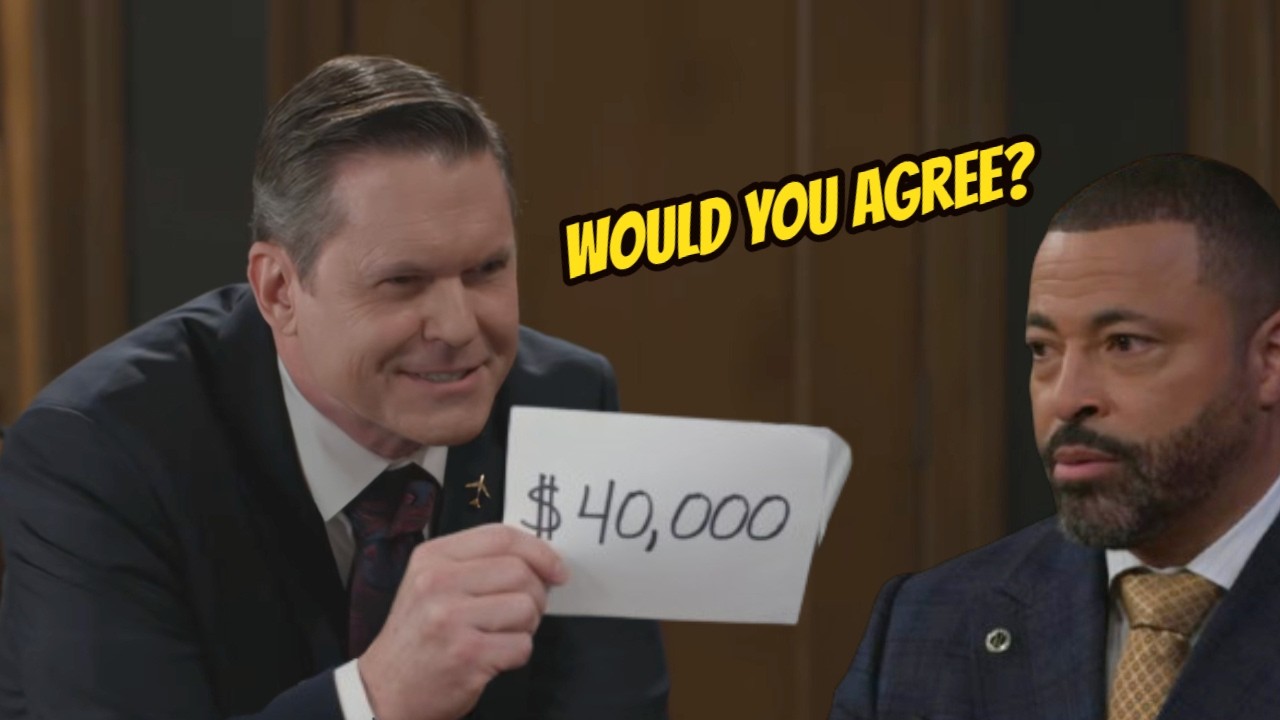
🚨 BILL THOUGHT HE WAS FACING A LAWSUIT — BUT MIKE JUST TURNED IT INTO PERSONAL WARFARE! 😱 The moment Mike stepped back into Bill’s orbit, everything changed. This is no longer just about Madison, Hazel Hardcourt, or a courtroom fight. This is about revenge, reputation, and the terrifying possibility that Bill’s own dirty legal tactics are finally being used against him. 💥 Mike knows Bill’s methods, understands his weaknesses, and may have enough leverage to destroy not only the case, but Bill’s entire public image. Now Chelsea, Madison, Naomi, and the whole family could be dragged into a brutal legal collapse where even victory may come at a devastating cost.
Key Takeaways
- Mike’s return makes Madison’s lawsuit far more personal and dangerous.
- Mike understands Bill’s legal tactics because he appears to have learned them from Bill himself.
- The lawsuit now carries emotional power because of the near death of a child.
- Mike knows juries respond strongly to sympathy, fear, and moral outrage.
- Bill is shaken because Mike is using his own playbook against him.
- The $40,000 demand looks like extortion disguised as negotiation.
- Naomi may be starting to see deeper ethical flaws in Bill’s methods.
- Madison feels guilty that her case is affecting everyone around her.
- Chelsea becomes an emotional anchor by reminding Madison that family stands together.
- Bill may win legally, but the long-term damage to his reputation, firm, and family could still be devastating.
Full Article
The moment Mike walked back into Bill’s orbit, it became painfully clear that Beyond The Gates was not setting up a normal legal battle.
This was personal.
Calculated.




Ugly.
And far more dangerous than anyone in Fairmont Crest may fully understand.
At first, Bill’s biggest problems seemed to revolve around Haley, Lynette, and the blackmail pressure that kept threatening to swallow his family whole. But now that Haley has temporary breathing room and Lynette is no longer actively controlling the narrative, the entire storyline has shifted.
The spotlight has moved directly to Madison’s lawsuit.
And Mike’s revenge.
That shift matters because the writers are revealing something very important about Bill. He may have spent years building an image of control, intelligence, and legal dominance, but he never truly escaped the consequences of how he built that power.
He only delayed them.
Mike is not just another enemy.
Mike is the consequence.
That is why the confrontation between Bill and Mike feels so sharp. The tension is not built on screaming or dramatic theatrics. It is built on recognition. Mike knows Bill. Not the polished attorney. Not the respected public figure. Not the man who smiles for clients and speaks confidently in conference rooms.
Mike knows the real Bill.
The strategist.
The manipulator.
The man who understands pressure, intimidation, legal exhaustion, and public perception better than almost anyone.
That is what makes Mike’s threats so frightening. When Mike says he can use Madison’s case to destroy Bill, it does not sound like empty intimidation. It sounds possible. Worse than that, it sounds informed.
Mike understands the emotional power of the case.
The near death of a child changes everything. It shifts the lawsuit from a technical legal dispute into something juries can feel in their bones. Mike knows that juries do not always respond to cold legal logic. They respond to stories. They respond to fear. They respond to sympathy. They respond to moral outrage.
And Madison’s case now has all of that.
That gives Mike a weapon Bill cannot easily neutralize.
But the most brutal part is that Mike basically admits he learned these tactics from Bill himself. That single detail reframes the entire power dynamic. At first glance, Mike looks like the villain returning to cause chaos. But beneath the surface, he feels more like Bill’s distorted reflection.
Everything Mike threatens to do sounds like something Bill may have once normalized.
Dragging out lawsuits.
Destroying reputations through pressure.
Forcing settlements through exhaustion.
Weaponizing public perception.
Turning fear into leverage.
Mike is not inventing a new game.
He is playing Bill’s game back at him.
That is why Bill looks shaken.
Not just angry.
Shaken.
There is a difference. If someone accuses you unfairly, you usually fight back immediately. You reject it. You deny it. You attack the lie. But when someone exposes methods you recognize, hesitation creeps in.
And Bill hesitates.
That hesitation may be the most revealing part of the entire confrontation.
Mike enters the conversation with disturbing confidence. He is not nervous. He is not begging. He is not trying to negotiate from weakness. He walks in already believing he has leverage, which means one of three things: he has evidence, he has insider knowledge, or he understands Bill psychologically well enough to know exactly where to press.
Any of those options is dangerous.
Together, they are explosive.
Bill’s greatest weakness is not that he is incompetent. He is clearly brilliant. His weakness is moral inconsistency. He wants to be seen as principled, respected, and controlled, but too many cracks keep appearing in that image.
The Lynette situation already suggested that Bill’s past decisions created disasters he could not fully manage.
Now Mike is confirming it.
Bill built systems of pressure.
Now he is trapped inside one.
And that is where Naomi’s role becomes fascinating.
Naomi has kept a professional distance from Bill despite his desire for her to eventually inherit the firm. That distance feels more meaningful now. It suggests that Naomi may see something fundamentally wrong in how Bill operates.
Not legally weak.
Ethically weak.
That distinction matters.
Naomi’s reaction to Mike is especially layered. On the surface, she attacks Mike’s lack of integrity and appears to defend Bill. But underneath that, there is a sense of frustration aimed at both men. Mike may be shameless, but Bill may have helped create the kind of environment where someone like Mike could thrive.
That is a painful truth for Naomi to face.
Because if she is meant to inherit Bill’s legacy, she has to ask herself what kind of legacy that really is.
Then comes the $40,000 demand.
That number changes the entire conversation.
The moment Mike writes it down, the scene stops feeling like legal strategy and starts feeling like extortion disguised as negotiation. Bill recognizes it instantly. His outrage is not confusion. It is recognition. He understands exactly what Mike is doing because, on some level, he understands the logic of pressure.
But Bill is right not to trust him.
Even if Bill paid Mike, there is almost no chance Mike would simply vanish. Mike’s motivations are not purely financial. Money may be part of it, but revenge is clearly driving him. Pride is driving him. Humiliation is driving him.
People like that do not stop once they get paid.
They want emotional satisfaction.
Mike does not just want compensation.
He wants Bill to suffer.
That is why this storyline feels much larger than a normal soap rivalry. Structurally, this feels like a collapse arc. Madison’s lawsuit threatens Bill’s reputation, the firm, Chelsea’s stability, Naomi’s trust, and the family’s public image.
One legal loss could trigger a chain reaction.
But even a legal win may not save them.
That is the terrifying part. Mike understands that long legal warfare can destroy people even when they technically win. Years of accusations, financial strain, public humiliation, and emotional exhaustion could damage Bill’s world beyond repair.
That means there may be no clean victory left.
Only damage control.
Chelsea and Madison’s entrance into Bill’s office brings the emotional stakes back into focus. Madison blaming herself feels painfully believable. She understands that her case is no longer affecting only her. It is spreading outward, pulling more people into the conflict and placing the family under pressure.
That guilt could destroy her if she lets it.
But Chelsea’s response becomes one of the most emotionally grounded moments in the storyline. She reminds Madison that she is family now, and helping family is what they do.
That moment matters.
Because while Bill and Mike are fighting through fear, power, and manipulation, Chelsea responds with loyalty. She is not treating Madison like leverage. She is not calculating strategic advantage. She is simply showing up emotionally.
That contrast is powerful.
In a storyline where almost every relationship is tied to secrets, pressure, money, or control, Chelsea becomes something different. She becomes the emotional backbone. Not because she has the most power, but because she understands support in a way Bill and Mike clearly do not.
Bill sees battles.
Mike sees revenge.
Chelsea sees family.
That may be why she could become the one person capable of holding the group together while everything else begins to fracture.
But the danger remains.
Bill is entering a legal war against a man who already understands how he thinks. That is a nightmare for any attorney. Most lawyers rely partly on unpredictability. Mike removes that advantage completely. He knows Bill’s strategies, his pressure points, his negotiation habits, and maybe even his emotional triggers.
It is like playing chess against someone who has studied your last hundred games.
Every move becomes risky.
And that is why the real conflict may not be Bill versus Mike.
It may be Bill versus the version of himself he spent years creating.
Mike is simply the weapon exposing it.
The deeper question is not whether Bill is talented enough to win. Of course he is talented. The real question is whether Bill can survive a battle where his own tactics are reflected back at him publicly.
That is much harder.
Especially with Naomi watching.
Especially with Chelsea and Madison depending on him.
Especially when one wrong move could validate everything Mike is saying.
Bill needs to stop reacting emotionally and start thinking strategically. Mike wants him angry. He wants him defensive. He wants him desperate. The more emotional Bill becomes, the easier it will be for Mike to push him into mistakes.
And Bill has a history of making dangerous choices under pressure.
The Lynette disaster already proved that.
Madison’s lawsuit may expose it permanently.
In a strange way, this entire storyline feels like a test of whether Bill can evolve. Can he become better than the systems he once used? Can he protect Madison without becoming the same ruthless man Mike is accusing him of being? Can he defend his family without proving his enemy right?
That is the emotional trap.
Power built through fear always creates enemies.
Eventually, one of those enemies learns the system well enough to fight back.
Mike clearly did.
And the scariest part is not that Mike returned for revenge.
The scariest part is that Bill looked like a man who realized, maybe for the first time, that Mike’s revenge might actually work.