Genoa City Faces Turmoil as Holden Novak’s True Parentage Is Revealed
A major revelation is about to shake Genoa City to its core, and it centers on a secret that has been buried for years. The return of Dr. Stephanie Simmons signals the beginning of a storyline that doesn’t just add drama—it threatens to rewrite history itself. This isn’t a simple confession or a long-lost memory resurfacing. Instead, it appears to be a carefully constructed twist that reaches back into the past and alters what fans thought they knew about key characters and relationships.

At the center of this storm is Holden Novak, whose life may be built on a lie. The emerging theory suggests that Holden is not who he believes he is—and more importantly, not the son of the people he thought were his parents. The truth points in a far more explosive direction: Holden could actually be the biological child of Malcolm Winters and Stephanie Simmons. If confirmed, this would instantly tie him to one of Genoa City’s most established families and shift his entire identity overnight.
Clues within the storyline support this possibility in subtle but powerful ways. Holden’s last name, Novak, may not be his original name at all, but rather a cover—either the result of an adoption or a deliberate attempt by Stephanie to hide the truth. It’s possible she placed him with another man or family to conceal Malcolm’s involvement, effectively erasing his real lineage. This kind of deception fits perfectly within the show’s tradition of hidden paternity and long-buried secrets waiting to resurface at the worst possible moment.
However, what makes this storyline stand out is not the reveal itself, but the emotional direction it takes afterward. Unlike typical soap opera reunions filled with tears and forgiveness, this situation is expected to go in the opposite direction. Holden is not likely to embrace the truth or welcome his biological parents into his life. Instead, all signs point to a deeply negative reaction—one fueled by shock, anger, and a sense of betrayal that cuts deeper than anyone anticipated.
Holden’s response could become the true centerpiece of the drama. Rather than seeking connection, he may reject Malcolm and Stephanie entirely, refusing to accept their explanations or form any kind of bond. This isn’t just resistance—it’s a full emotional shutdown. For Holden, the revelation may feel like an attack on everything he thought was real, leaving him unable or unwilling to rebuild his identity around a truth he never asked for.




The consequences of that rejection could be immediate and dramatic. Malcolm and Stephanie may not stay in Genoa City long enough to repair the damage. Instead, they could be pushed out almost as quickly as they arrive, turning what could have been a long-term family arc into a short but intense storyline. Their exit would leave behind unresolved tension and emotional fallout that continues to ripple through the lives of those connected to them.
Amid this chaos, Lily Winters may emerge as a crucial figure in the story. As someone who would share a biological connection with Holden, she could become the only person capable of reaching him. Lily’s role may not be to force acceptance, but to offer understanding and patience—something Holden may desperately need but initially refuse. Her attempts to bridge the gap could provide the emotional grounding this storyline requires, even if they don’t succeed right away.
Behind the scenes, there are indications that this story is far from over. The actors involved are expected to return for additional filming, suggesting that this initial reveal is only the beginning. What unfolds now may simply set the stage for a second phase, where the emotional consequences are explored more deeply and Holden is given time to process the truth at his own pace.
Ultimately, this storyline is not about discovering family—it’s about rejecting it. It explores the darker side of identity, where truth doesn’t heal but instead fractures everything. Holden’s journey is shaping up to be one of resistance, pain, and internal conflict, rather than reconciliation. And in true soap opera fashion, the most powerful question isn’t what the truth is—but whether anyone can survive it once it’s finally revealed.
Cane’s Collapse Marks Shift from Businessman to Unpredictable Predator
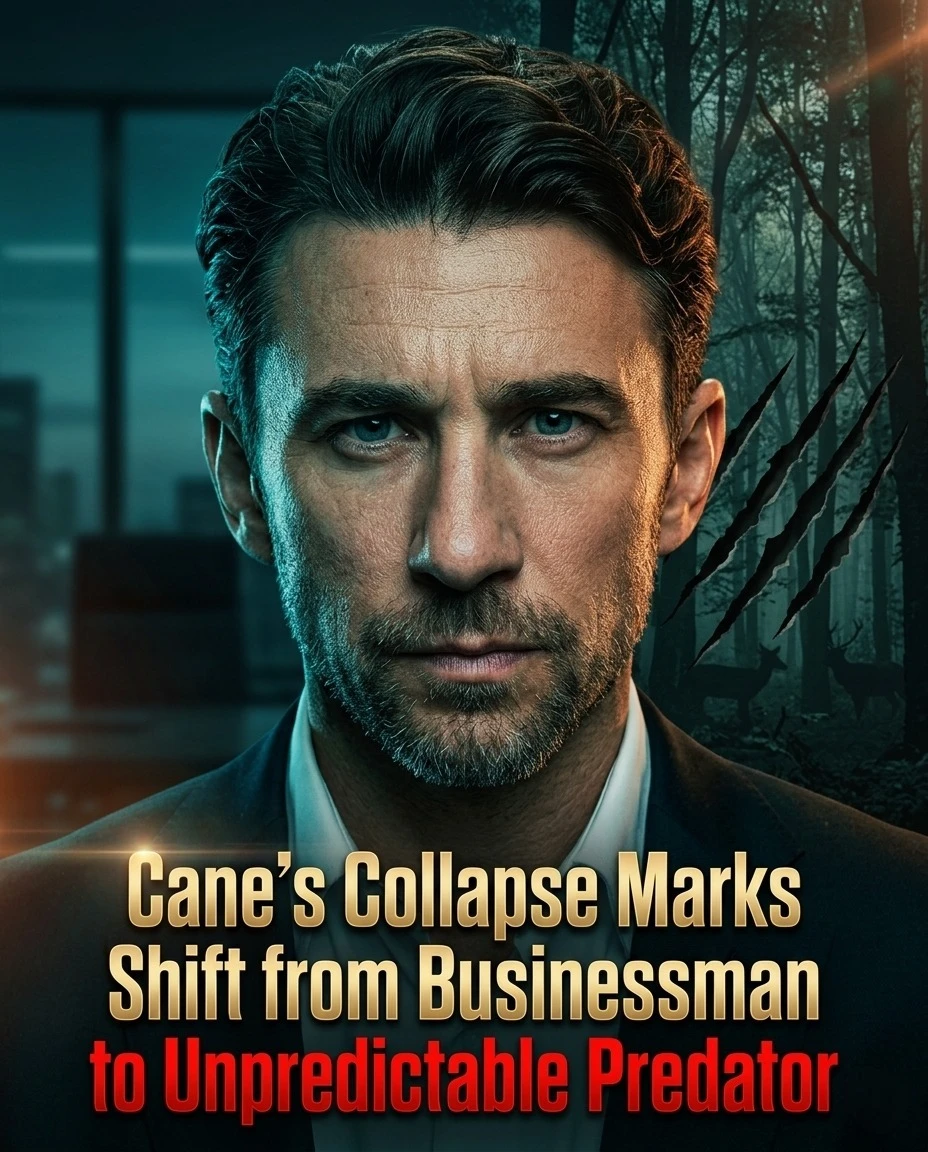
Cane’s sudden collapse wasn’t just a business failure—it felt like a complete erasure of everything he once controlled. In a single moment, Arabesque was gone, his money vanished, and every safety net he relied on disappeared. But what made this moment so compelling wasn’t the loss itself. It was the silence that followed. No panic, no desperation—just a shift. And that shift is what makes this storyline so explosive, because it doesn’t read like a downfall. It reads like the beginning of something far more dangerous.

What Cane lost wasn’t limited to his company. His personal world had already been unraveling long before the financial blow. Lily had walked away, his connection to his family was strained, and his reputation had taken hit after hit. By the time Arabesque collapsed, Cane wasn’t just financially ruined—he was emotionally isolated. And that kind of isolation matters, because it creates a version of a man who no longer has anything to protect. When there’s nothing left to lose, the rules stop mattering.
The most important turning point wasn’t the bankruptcy itself—it was Cane’s reaction to it. When he fired his accountant without hesitation, it wasn’t just anger. It was clarity. That moment signaled that Cane was no longer interested in playing by the same system that had just failed him. He didn’t argue, he didn’t negotiate, and he didn’t try to fix what was broken. Instead, he made a choice to abandon the structure entirely. That’s what transforms this from a business story into a power story.
Cane’s declaration that he would “take what others have” is where everything changes. On the surface, it sounds reckless, even illegal. But through a different lens, it reads as something else entirely—a man refusing to ask for permission anymore. Cane isn’t trying to rebuild what he lost. He’s trying to replace it on his own terms. And that distinction is critical, because it reframes him from a failed businessman into a calculated predator who is ready to operate outside the boundaries that once contained him.
Fans are already picking up on this shift, and that’s why the reaction has been so strong. This doesn’t feel like a character being destroyed—it feels like a character being redefined. Cane has often existed in a gray space, but now that gray is deepening into something sharper, more compelling. Viewers aren’t just watching him fall. They’re watching him evolve into a version of himself that is harder, colder, and far more unpredictable.
There’s also a powerful emotional undercurrent driving this transformation. Cane didn’t arrive at this moment in a vacuum. He was pushed. Rejected by Lily, challenged by Devon, dismissed by those who once stood beside him—every fracture contributed to this outcome. That’s why it’s so easy to frame this not as a descent into villainy, but as a response to betrayal. Cane didn’t wake up and decide to become dangerous. The world around him stripped away every reason not to be.
What makes this new version of Cane especially threatening is the shift in power dynamics. Before, he still had something to lose—relationships, reputation, a sense of identity. Now, those anchors are gone. Without them, he becomes far less predictable and far more willing to take risks others wouldn’t dare. That unpredictability is what turns him into a genuine threat, not just to his enemies, but to the entire balance of power in Genoa City.
And that leads to the most unsettling truth of all: Cane may now be at his strongest precisely because he has nothing left. A man who is no longer afraid of losing is a man who can’t be controlled. He doesn’t need approval, he doesn’t fear consequences, and he doesn’t hesitate. That combination is what transforms him from a fallen businessman into a force that could reshape everything around him.
Looking ahead, this storyline feels like the setup for something much bigger. Cane’s new mindset opens the door to corporate takeovers, strategic revenge, and possibly even direct conflict with figures like Victor. But the real tension lies in how far he’s willing to go—and who will get caught in the crossfire. Because if Cane truly believes the world owes him something, then he’s not just rebuilding. He’s coming to take it.
In the end, this isn’t a story about loss. It’s a story about what happens after the loss, when fear disappears and restraint goes with it. Cane didn’t lose everything. He lost the part of himself that was willing to hold back. And that might be the most dangerous transformation of all.