Shanice Asks Nicole for Relationship Advice! | Beyond the Gates!
Joey’s Lynette Manhunt Turns Randy Into the Weak Link as Shanice Finally Confronts Ted
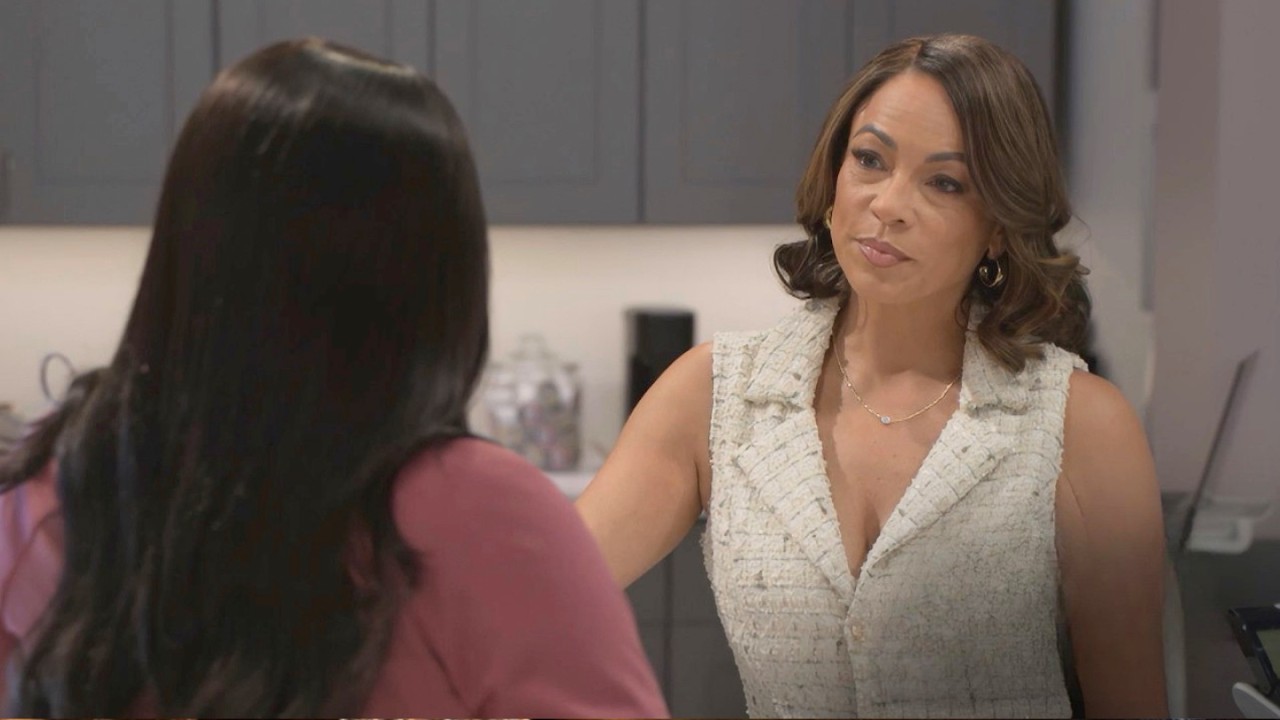
🚨 BEYOND THE GATES IS ABOUT TO SPLIT OPEN TWO VERY DIFFERENT KINDS OF TRUTH! 😱 While Joey launches a ruthless search for Lynette, Randy stands frozen in terror because he knows finding her may not solve the problem — it may expose everything. 💔 Lynette is not just missing. She is dangerous, informed, and capable of detonating secrets powerful enough to destroy Joey’s control. Meanwhile, Shanice turns to Nicole for emotional guidance as her relationship with Ted reaches a breaking point, forcing her to stop making choices from fear and finally say the words she has avoided for too long: “We need to talk.” 🔥
Key Takeaways
- Joey’s search for Lynette becomes colder, sharper, and more dangerous.
- Randy realizes Joey is no longer reacting emotionally — he is executing a calculated plan.
- Lynette’s disappearance may expose secrets that could destroy powerful alliances.
- Randy fears that if Lynette talks, the fallout will be impossible to contain.
- Joey begins watching Randy closely, sensing he may know more than he is saying.
- Shanice visits Nicole because her relationship with Ted has become too painful to handle alone.
- Nicole urges Shanice not to make decisions from fear.
- Shanice realizes she has been measuring love by how much she can endure.
- After leaving Nicole’s house, Shanice calls Ted and finally demands an honest conversation.
- Both storylines revolve around buried truths finally becoming impossible to avoid.
Joey did not simply order people to find Lynette.




He turned the entire situation into a hunt.
That is what makes this moment so chilling. At first, Joey’s anger may have looked like an emotional reaction, the kind of explosion people expect from a man whose control has been challenged. But after the initial outburst, something much more dangerous takes over.
Joey gets quiet.
And that silence is worse than shouting.
Because when Joey stops yelling, it means he is thinking. It means he is calculating. It means everyone in the room has just become either useful or expendable. His rage sharpens into focus, and suddenly the search for Lynette is no longer chaotic.
It is organized.
It is strategic.
It is terrifying.
Joey begins assigning roles with eerie precision. He tells people where to go, who to contact, what to ask, and how quickly he expects results. Nothing about him feels uncertain. Nothing feels improvised. He moves like a man who has already imagined this crisis and is now simply setting the machine in motion.
And Randy sees it.
That is why Randy’s fear becomes the most important detail in the room.
Everyone else may be afraid of Joey’s temper, but Randy is afraid of what the search will uncover. He knows Lynette is not just a missing woman. She is not just someone who ran, disappeared, or slipped out of reach. Lynette is a threat because of what she knows.
And if Joey finds her, there may be no way to control what comes next.
That is the real horror.
Finding Lynette could be worse than losing her.
Randy understands that Lynette is not powerless. She is not a frightened woman hiding in a corner, waiting to be dragged back. She is a player. She has survived this long because she knows how to stay ahead, how to read people, and how to use information as protection.
If Joey corners her, Lynette may not beg for mercy.
She may talk.
And if she talks, everything could collapse.
Alliances could shatter. Reputations could be destroyed. Secrets that have been buried under loyalty, money, intimidation, and silence could finally come into the light. The story Joey has built around himself, the version of control he needs everyone to believe in, could be ripped apart by one woman who knows too much.
That is what Randy cannot stop thinking about.
Lynette is not only missing.
She is loaded with consequences.
If she reveals everything she knows, Joey’s world could ignite instantly. But if she chooses a smarter route and uses her secrets as leverage, the danger may become even worse. Lynette could bargain. She could threaten. She could force people to choose sides. She could turn Joey’s own system against him.
That possibility traps Randy in the middle.
He is loyal to Joey, or at least he is supposed to be. But loyalty becomes complicated when the truth could destroy the person demanding it. Randy knows enough to be afraid, and that may be exactly what makes him dangerous.
Because fear has a way of showing.
Joey begins to sense something beneath Randy’s silence. His gaze sharpens. His attention shifts. He looks at Randy as if he is not only searching for Lynette anymore, but also searching for weakness inside the room.
That is the moment Randy’s window for silence begins to close.
Joey may not know exactly what Randy is hiding yet, but he can feel that something is there. A hesitation. A stiffness. A wrong kind of fear. And with Joey, suspicion is never harmless. Once he begins questioning Randy, the search for Lynette becomes two hunts at once.
One for the missing woman.
One for the truth Randy is trying to bury.
That is why this storyline feels ready to explode. Randy wants to slow the search, but any attempt to slow it will look suspicious. He wants to redirect Joey, but redirection could expose that he knows too much. He wants to protect himself, but every second of silence makes him look guiltier.
He is trapped.
And he knows it.
The tragedy is that Joey thinks finding Lynette will restore control, but Randy understands the opposite may be true. Lynette’s return could end the illusion of control forever. Once she is found, there will be no putting the truth back into the shadows.
This is not the beginning of a search.
It is the beginning of a collapse.
While Joey and Randy are caught in a storm of power, secrets, and fear, Shanice is facing a quieter but equally important emotional reckoning.
She sits outside Nicole’s house longer than she needs to, gripping the steering wheel as if holding on to it can keep her life from moving forward. That image says everything. Shanice is not ready, but time is moving anyway. Her relationship with Ted has become too heavy to carry alone, and deep down, she knows she is standing at the edge of a decision she cannot avoid much longer.
That is why she comes to Nicole.
Not because she has answers.
Because she is afraid she might make the wrong choice without them.
Nicole immediately understands that Shanice is not okay. She does not force her to explain too quickly. She simply opens the door, lets her in, and gives her the kind of space that feels safe enough to fall apart in.
That matters.
Shanice is used to holding herself together. She is used to surviving complicated love, messy feelings, and uncertainty. But with Nicole, she finally lets some of that guard down. She admits she does not know where to start, and Nicole gives her the perfect answer.
Start wherever it hurts the most.
That line breaks through Shanice’s defenses because there are too many places where it hurts. Her relationship with Ted has become fragile. Arguments do not resolve anything. Silences feel heavier than fights. The future she once imagined no longer feels certain, and the worst part is that she cannot tell whether she is still holding onto real love or only the memory of what used to be.
That question is painful because it forces Shanice to face the truth she has been avoiding.
A relationship can still have history and still be unhealthy.
A love can still matter and still not be enough.
A person can still care and still be tired.
When Nicole asks whether Shanice still loves Ted, the question hangs in the air because love is no longer the only issue. Shanice may love him, but does she feel seen? Does she feel fulfilled? Does she feel safe enough to be honest? Or has she been mistaking endurance for devotion?
That realization becomes even clearer after Shanice leaves Nicole’s house.
Nicole gives her one final piece of advice: do not make a decision from fear.
That sentence follows Shanice home.
Because fear has been shaping more of her choices than she wanted to admit. Fear of being alone. Fear of starting over. Fear of admitting that something she once believed in may not be right for her anymore. Fear of grieving a relationship that is not fully gone, but no longer feels fully alive.
That is the emotional heart of Shanice’s story.
She is not suddenly ready to end everything. She is not magically certain. But she is finally awake to the fact that avoiding the truth has become its own kind of pain.
When she gets home, the stillness around her feels heavier than usual. The life she has built looks familiar, but not completely certain anymore. She looks at the pieces of her world and asks the question she can no longer avoid.
Where does Ted fit now?
Not in the past.
Not in the future she imagined.
But in the life she is actually living today.
That question pushes her to do what she has been afraid to do.
She calls him.
Her thumb hovers over his name because this is the moment where old patterns could pull her back. She could stay quiet. She could tell herself it is not the right time. She could wait until things calm down. But Nicole’s words keep echoing.
Do not decide from fear.
So Shanice presses call.
And when Ted answers, surprised and unsure, Shanice does not attack. She does not accuse. She does not pretend everything is fine. She simply opens the door to honesty.
“We need to talk.”
Those four words may change everything.
The conversation is not easy. It is not clean. There are pauses, misunderstandings, and old habits trying to creep back in. But Shanice does something different this time. She does not shrink herself to keep the peace. She does not dismiss her own feelings just to avoid discomfort. She asks the questions she has been avoiding, and she listens without immediately excusing what hurts her.
That is growth.
Not because everything is fixed.
Because she finally stops pretending.
By the end of the call, Shanice still does not have every answer. Her relationship with Ted is not magically repaired. The future is still uncertain. But something inside her has shifted. She is no longer passively enduring the relationship. She is actively evaluating it.
That difference matters.
Shanice realizes that truth does not always arrive as a dramatic explosion. Sometimes it arrives as a quiet decision to stop lying to yourself.
And that connects her story to Joey and Randy’s in a powerful way.
Both storylines are about truth closing in.
Joey is hunting Lynette because he wants control, but Randy knows the truth may destroy that control.
Shanice is confronting Ted because she wants clarity, even if the truth may change her life.
One story is full of danger, power, and buried secrets.
The other is full of heartbreak, vulnerability, and emotional honesty.
But underneath both is the same question.
What happens when silence is no longer possible?
For Randy, silence may soon become a death sentence.
For Shanice, silence has already become emotional suffocation.
Joey’s search for Lynette could expose secrets that burn through every alliance around him. Shanice’s conversation with Ted could expose whether their relationship still has a future or whether she has been holding onto something that cannot be saved.
Both are standing at a threshold.
Randy at the edge of exposure.
Shanice at the edge of clarity.
And in Beyond the Gates, once someone finally opens the door to the truth, there is no guarantee they will like what waits on the other side.