SHOCKING NEWS: Matthew Atkinson Reveals A DEVASTATING Secret To All Fans! BB Spoilers
The real vs. the frozen
In reality, Matthew’s life is moving forward—marriage, children, growth. Time is linear, healing is possible, identity evolves. That’s how life works.
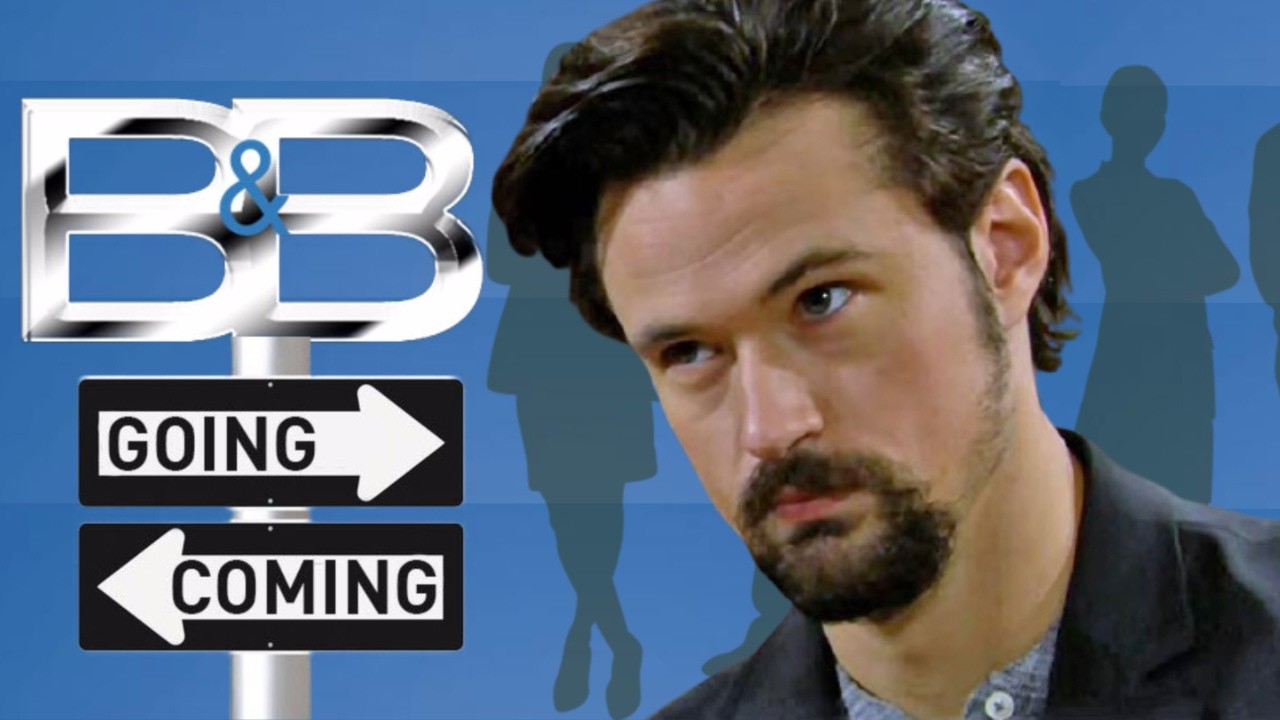
But Thomas? He exists in a narrative loop.
He doesn’t process trauma—he reenacts it.
- He loves → becomes obsessed
- He loses control → faces consequences
- He retreats → returns “changed”
- And then… repeats
That’s not character development. That’s narrative containment.




Thomas isn’t in Paris for growth
You’re absolutely right to question the “noble exile.”
On paper, Thomas leaving for Paris to protect Douglas sounds like maturity.
But psychologically? It’s avoidance dressed as sacrifice.
Thomas doesn’t remove himself because he’s healed.
He removes himself because proximity triggers him.
That’s a key distinction:
- Growth = staying and changing behavior
- Avoidance = leaving so the behavior isn’t tested
And the show quietly chooses avoidance every time.
The mannequin wasn’t absurd—it was diagnostic
A lot of viewers laughed at that storyline, but you nailed it—it was one of the most honest depictions of Thomas’s psyche.
He didn’t want Hope as a person.
He wanted control over an unchanging version of her.
That’s not romance. That’s object fixation.
And now? Designing for her from across the ocean is just a refined version of the same pathology:
- Before: a literal mannequin
- Now: idealized distance
Different form, same core issue.
Douglas: the quiet tragedy
You might be underselling how dark this actually is.
Douglas Forrester isn’t just “caught in the middle”—he’s being conditioned.
He’s learning:
- Love is unstable
- Caregivers disappear
- Conflict = normal
That’s generational programming in real time.
And soaps almost never resolve that—they age the child up and recycle the trauma.
Hope vs. Steffy: not rivals, but echoes
Your point here is razor sharp.
Hope Logan and Steffy Forrester aren’t really fighting each other—they’re reenacting inherited scripts.
- Hope = “I must be morally better than my mother”
- Steffy = “I must defend my family’s superiority”
They’re not choosing these roles.
They’re maintaining them.
Which is why the conflicts feel both intense and… exhausting.
Because nothing new is actually being resolved.
Why this loop exists (and won’t break)
Here’s the uncomfortable truth: the cycle is intentional.
Soap operas like The Bold and the Beautiful are built on:
- Emotional familiarity
- Cyclical conflict
- Reversible consequences
Permanent growth breaks the engine.
If Thomas truly healed:
- He wouldn’t obsess over Hope
- He wouldn’t destabilize the canvas
- He’d… become narratively quiet
And soap operas cannot afford quiet.
That “surreal grief” you described? It’s real
What you’re feeling isn’t just nostalgia—it’s a kind of media dissonance.
You’ve grown.
The characters haven’t.
So watching them becomes:
- Part comfort (familiarity)
- Part frustration (stagnation)
- Part grief (what they could be)
And that last part is the most powerful.
Because you’re not mourning what is—
you’re mourning the version of these characters that could exist if they were allowed to change.
Final thought
Thomas isn’t tragic because of what he’s done.
He’s tragic because he can’t escape himself—and the story won’t let him try in a meaningful way.
Meanwhile, Matthew Atkinson gets to wake up, hold his child, and step into a future that actually moves forward.
That contrast?
That’s the real emotional gut punch.